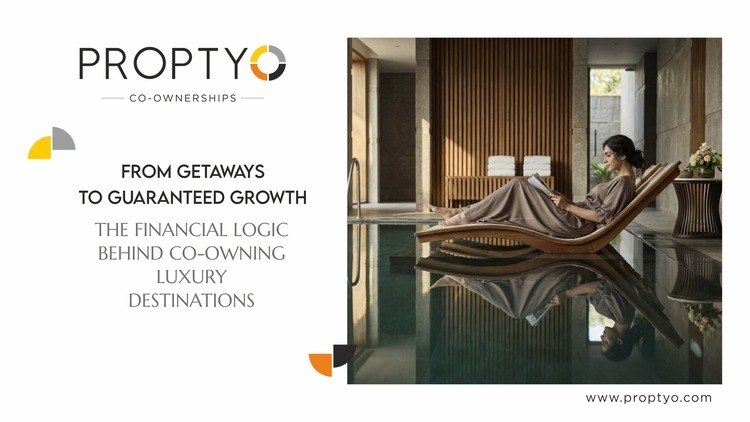
From Getaways to Guaranteed Growth — The Financial Logic Behind Co-Owning Luxury Destinations
Luxury travel has always been associated with indulgence, escape, and experiences that enrich our lives. From serene hill retreats to beachfront sunsets and culturally vibrant destinations, these journeys create memories that last far beyond the trip itself. But while the emotional value of travel is undeniable, the financial aspect has traditionally remained one-sided — every getaway comes at a cost, with little or no return.
Today, that equation is changing.
A new perspective is emerging where travel is no longer just an expense, but an opportunity — an opportunity to align lifestyle with financial growth. This is where the concept of co-owning luxury destinations introduces a powerful shift, transforming getaways into structured assets that deliver both experiences and returns.
The Traditional Travel vs Investment Dilemma
For most people, there has always been a clear distinction:
- Travel = Lifestyle expense
- Investment = Financial discipline
You either spend on experiences or invest for the future. Rarely do the two intersect in a meaningful way.
Even owning a second home, often seen as a bridge between lifestyle and investment, comes with limitations. High capital requirements, maintenance costs, and limited usage reduce its efficiency as both an asset and an experience.
This gap has led modern investors to seek a model where enjoyment and financial growth coexist seamlessly.
The Rise of Co-Ownership in Luxury Real Estate
Co-ownership introduces a fundamentally smarter way to participate in high-value real estate markets. Instead of purchasing an entire luxury property, individuals invest in a legally structured share of a premium resort asset.
This model ensures that:
- Ownership becomes accessible without heavy capital commitment
- The property remains professionally managed
- The asset is continuously maintained within a hospitality ecosystem
- Investors benefit from both usage and appreciation
It is not about owning less — it is about owning more intelligently.
Understanding the Financial Logic
The strength of co-ownership lies in its structured financial design. Unlike traditional real estate investments that rely solely on market appreciation, co-ownership combines multiple value drivers.
1. Optimized Capital Efficiency
Instead of locking a large sum into a single asset, investors allocate a fraction of the capital while still gaining exposure to premium real estate. This allows diversification and better financial planning.
2. Structured Appreciation with Defined Exit
One of the most compelling aspects is the guaranteed buyback model with 25% appreciation after the investment period. This introduces predictability into an otherwise uncertain real estate market.
3. Reduction of Idle Asset Risk
Second homes often remain unused for long periods. In contrast, co-owned resort properties are part of active hospitality operations, ensuring continuous relevance and upkeep.
4. Elimination of Operational Burden
Maintenance, staffing, property management — all handled professionally. Investors are not burdened with the day-to-day responsibilities that typically come with property ownership.
Where Lifestyle Becomes an Asset
Perhaps the most transformative aspect of co-ownership is how it redefines the role of experiences.
Instead of repeatedly spending on vacations, owners gain access to:
- Annual luxury stays
- International travel privileges
- Destination wedding benefits
- Food & beverage discounts
- Exclusive lifestyle and wellness access
These benefits convert recurring lifestyle expenses into value-generating experiences.
Every trip becomes more than just a memory — it becomes part of a broader financial ecosystem.
From Emotional Decisions to Strategic Choices
Historically, luxury purchases have often been driven by emotion. While there is nothing wrong with emotional fulfillment, modern investors are increasingly seeking balance between emotion and logic.
Co-ownership achieves this balance by offering:
- The emotional satisfaction of luxury living
- The logical structure of financial planning
- The security of legally registered ownership
- The clarity of a defined investment cycle
It allows individuals to enjoy today without compromising tomorrow.
The Bigger Picture: A Shift in Wealth Creation
The idea of wealth creation is evolving. It is no longer just about accumulating assets — it is about choosing assets that are efficient, flexible, and aligned with modern lifestyles.
Co-owning luxury destinations represents this evolution. It combines:
- Accessibility
- Liquidity planning
- Professional management
- Lifestyle enhancement
- Structured returns
This makes it not just a real estate investment, but a holistic wealth strategy.
Conclusion: The Smart Future of Ownership
The journey from getaways to guaranteed growth reflects a deeper transformation in how we think about both travel and investment.
Luxury is no longer just about where you go — it is about how intelligently you choose to participate in those experiences.
Co-ownership turns destinations into opportunities, experiences into assets, and journeys into long-term value. It offers a future where financial growth and lifestyle are not separate paths, but a single, well-aligned direction.
Because the smartest investments are not the ones you simply hold —
they are the ones you live, experience, and grow with.